






Christina Burton-Fox AIFD floral artist & instructor
Wednesday, May 13, 2020

Monday, April 27, 2020
Florists Review
Curvilinear Forms
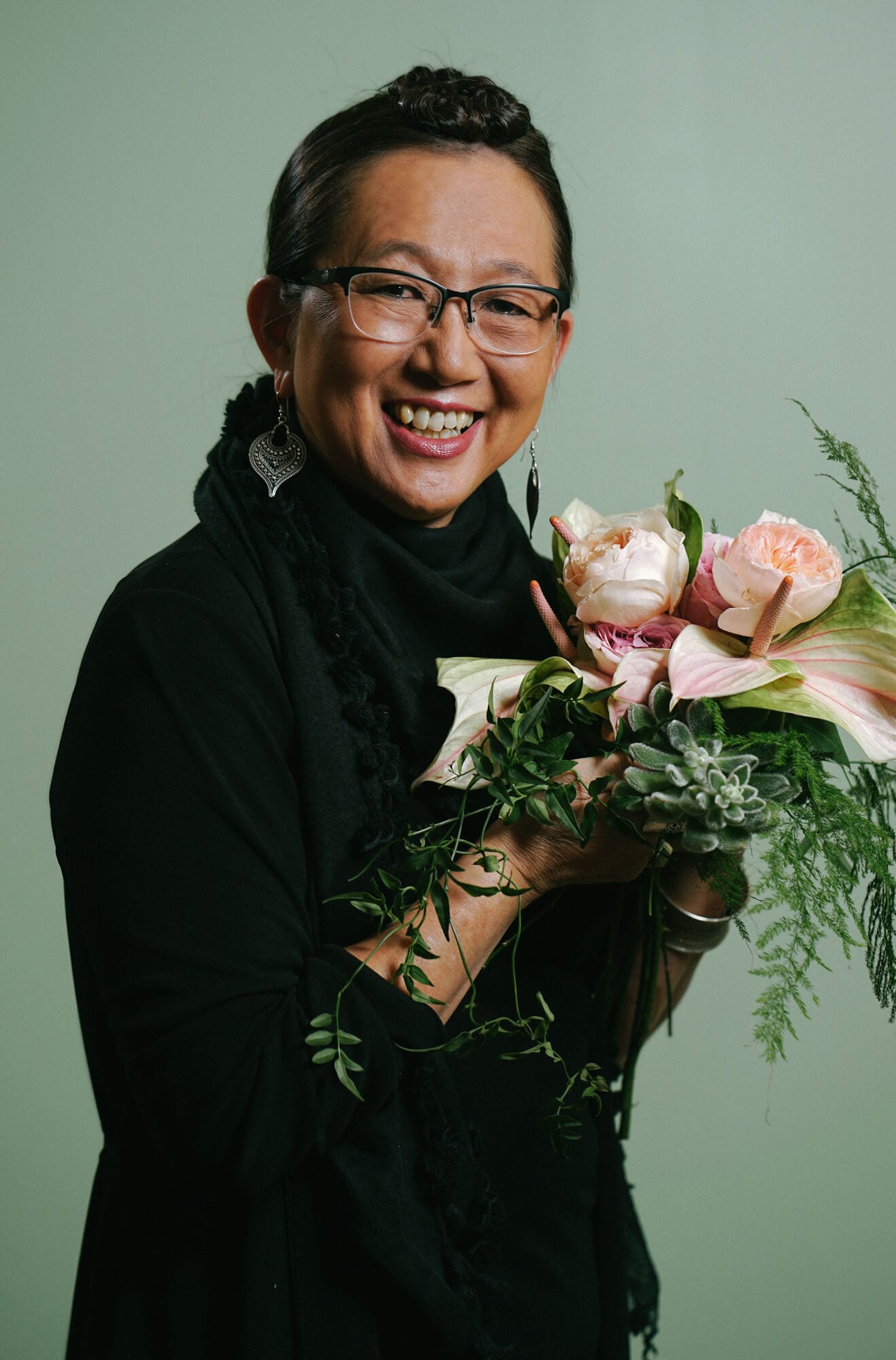
Floral designs and text by Hitomi Gilliam, AIFD; Photos by Colin Gilliam Posted April 6, 2020
“Strong yet graceful lines impart energy and vitality to these modern versions of classic curvilinear silhouettes, designed in equally classic compote and urn containers.”
For some botanical artists, line is an important element to kick-start the process of design. Line creates a visual flow through the arrangement for the eyes to follow. These contemporary interpretations of line-based classic curvilinear forms – crescent (“C” or “U” shape), Hogarth Curve (“S” shape) and vertical – illustrate how the successful creation of linear flow results in lyrical movement of life through the arrangement. NOTE: Creating successful lines sets in motion a process of flowering that requires a thoughtful application of design principles, particularly balance and proportion.
Basic
Classic Crescent
The compote is a perfect vessel for a crescent design. This asymmetrical crescent silhouette is initially “sketched in” with floral-taped Midollino Sticks “extenders,” then wired, with Bind Wire, to Forsythia branches and inserted into a kenzan, or pin holder. The structure is first filled lightly with foliage, followed by a springy combination of botanicals in a split-complementary color harmony.
The compote is a perfect vessel for a crescent design. This asymmetrical crescent silhouette is initially “sketched in” with floral-taped Midollino Sticks “extenders,” then wired, with Bind Wire, to Forsythia branches and inserted into a kenzan, or pin holder. The structure is first filled lightly with foliage, followed by a springy combination of botanicals in a split-complementary color harmony.
Advanced
Classic Hogarth Curve
Tall stemmed compotes are the most suitable vessels for a Hogarth Curve design. This classic style features an S-shaped curve, or serpentine line, also known as the “Line of Beauty.” It was named after William Hogarth, an 18th-century English painter, who described it in his book, The Analysis of Beauty (1753). The curvilinear silhouette is created with a Midollino Sticks “extender,” which is covered with yarn, wired to Forsythia branches with Bind Wire, and inserted into a hairpin holder. The structure is laced with jasmine vine, Chilean feather fern and Genista, then loosely flowered to maintain some transparency.
Tall stemmed compotes are the most suitable vessels for a Hogarth Curve design. This classic style features an S-shaped curve, or serpentine line, also known as the “Line of Beauty.” It was named after William Hogarth, an 18th-century English painter, who described it in his book, The Analysis of Beauty (1753). The curvilinear silhouette is created with a Midollino Sticks “extender,” which is covered with yarn, wired to Forsythia branches with Bind Wire, and inserted into a hairpin holder. The structure is laced with jasmine vine, Chilean feather fern and Genista, then loosely flowered to maintain some transparency.
LATEST NEWS

April 22, 2020

March 23, 2020

April 24, 2020

April 24, 2020

April 19, 2020

April 21, 2020

Christina Burton-Fox AIFD floral artist & instructor
Tuesday, April 21, 2020
Coloured by Gerbera
|


Christina Burton-Fox AIFD floral artist & instructor
Subscribe to:
Posts (Atom)